By Pauline Weston Thomas for Fashion-Era.com

Technology and Fashion History
- Textile Technology Developments Amid Lifestyle Changes
- Man Made Fibres and Blends
- Sports Fibres
- New Fabrications
- Tyvek®
- Australia - Fermented Wine Material
- Invista T400 XFit Lycra
- Shop Till You Drop
- Shopping for Tweenies
- Middle Youth New Outlooks on Shopping
- Television and Internet Shopping
- Baby Boomers Consume with Opinion
- Store Versus Internet Shopping
Textile Technology Developments Amid Lifestyle Changes
Technological improvements in the last forty years of the 20th century included improved fabric technology and automated garment construction techniques.
Busy lifestyles, easier home laundering and workplace changes embracing dress down Fridays, have encouraged a more relaxed attitude to clothing in many situations. Dress adapted to meet these needs.
Man Made Fibres and Blends
Rayon, the regenerated fibre developed in the late Victorian era was joined by a new kind of fibre also man made, but totally synthesised from chemicals found in the petrol industry.
Synthetic fibres developed in the 1930s and 1940s, came into general use in the 1950s. Polyamide (Nylon), Polyester, Polyacrylonitriles (Acrylics), Polyolefins and Polyurethanes (Spandex, and Lycra) were all the rage in the 1950s and 1960s.


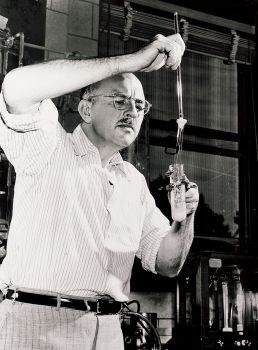
Images courtesy of Dupont
Later combinations with natural fibres such as wool or cotton introduced the consumer to the concept of easy care fibre blends with a natural feel.
Polycotton garments and the reduced costs of wool and acrylic mixed knits encouraged people to discard clothes more easily as clothes sewn with speedier operations could also be produced faster at less cost.
Viscose rayon was courted again in the 1980s, when there was the start of a reaction against synthetic fibres. Viscose crinkle fabrics and fabrics with exceptional drape or sheer effects wooed the consumer back.
By 2000 designers had caught on to adding Lycra or Spandex to fibres like viscose and acetate and created garments with great comfort and better shape retention in wear.
Chemists concentrated in improving all the man made fibres and by the 1980s, new variations which produced luxury look fabrics hit the marketplace. These improvements in fibre manufacture continue today and the buzzword for the 1990s was microfibres.
Perhaps the biggest fibre development story of all is the believability of fake furs. Quality fake furs are not cheap, but they are so convincingly acceptable that the consumer has embraced them.
You are reading an original Fashion Technology article by Pauline Weston Thomas at www.fashion-era.com ©
Sports Fibres
Sportswear was revolutionized in the late C20th by the use of Lycra and later by microfibres. Fabrics like fleece and Sympatex were specifically developed for fluctuations in weather conditions.
It is unlikely that street fashion would have adopted them so readily if there had not been the status association of sporting prowess. When this was combined with effective functional utility, a fabric fashion was born that encompassed all ages from young skateboarders to elderly golfers.
Moisture management fibres were developed to accommodate the desire for more comfortable sportswear. Function is paramount according to Dupont who manufacture Coolmax and Tactel. These fibres are used commonly today in socks and lingerie.
Of these fibres perfect for sportswear they say:- " The Coolmax® family of fibres with effective moisture-management properties for specific individually demanded requirements, guarantee consumers stay cool, fresh and dry in every situation. Whilst Tactel® creates either shiny, bi-, multicolour or iridescent effects in stylish exercise wear, leisurewear with high-fashion approach and sports couture. Tactel freshFX™ has also proved a success. This range of polyamide yarns combines the anti-microbial properties of silver - a natural, innocuous and dermatologically tested active ingredient - with the typical characteristics of the Tactel® family: lightness, breathability, softness, hard wearing and easy care.
Tactel® supermicro is an extremely lightweight, super-fine yarn that is perfect for sheer lightweight fabrics, ideal for the intimate apparel market. INVISTA aim to stay ahead of the game by anticipating new trends and consumer needs.
Tactel® diabolo has unmatched drape and bright aesthetics which makes it a real favorite with intimate apparel manufacturers and brands."
New Fabrications
So by March 2007 the search for new materials was as strong as it was a 100 years before. With mounting eco concerns we hear that in Australia a sludge made by bacteria, in a vat of fermenting wine, has been used to create a (foul smelling) garment. Early days for the new product - but with refinements this could be a fabric of the future.
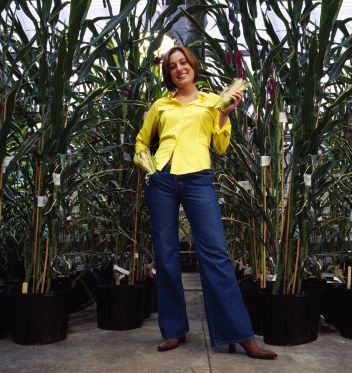
Just remember that pineapple, corn and bamboo are all commercially produced materials now. The picture right is of corn the basic constituent of Sorona a corn based fibre.
DuPont™ Sorona™ is from a annually renewable agricultural products like corn sugar, DuPont can produce 1,3 propanediol (PDO), the key building block for DuPont™ Sorona® – the company's newest polymer platform.

Fermented Fabric - University of Western Australia
In 2007 the first fabric made from grape ferment was shown in Australia. Australian researchers using bacteria to grow a sludge from fermenting wine and beer at the University of Western Australia. The aim of the project was to provoke discussion about future fashions and the use of materials other than the usual silk or cotton.
A researcher noticed that when oxygen entered the wine vats and the wine was turned to vinegar another aspect was the layer of slimy sludge that grew on the surface. The sludge layer was cellulose a waste product of acetobacter bacteria.
To make a dress the researchers used a life size inflatable doll and lifted the slimy rubbery cellulose layers onto the doll. Once the cellulose dress forms around the doll shape, the dress is removed from the inflated form. No stitching, heat or adhesives are used to get the material to form together. It's just the bacteria that holds the material together.
In the dry state the cellulose dress material is like tissue paper so the dresses must be kept wet to avoid ripping easily!
This all sounds a little like keeping the Mary Rose ship in good condition after it was taken from the seabed!
Whilst this novel dress material may seem amusing, great discoveries often start with something which is not quite right. Nylon is an example of this.
The original nylon fibre was better suited to a tooth brush bristle than a gown. Needless to say experiments are continuing with the fermented cellulose in the hope that a polymerization of the cellulose can be achieved to ultimately produce a long fibre or stable dress.
You are reading an original Fashion Technology article by Pauline Weston Thomas at www.fashion-era.com ©
Tyvek®
Designers are also innovating and turning to modern materials unlike our preconceived ideas of what a fabric should be like. This can bring a newness to fabrications. In 2007 Prada recently used a new fabrication of mohair reforming as silk. Marni also used fabrics that used heat fusion with nylon polypropylene. Other materials like Tyvek® are recycled into clothing.
An example of moving boundaries is the use of Tyvek® technology in fashion in unexplored ways to create unusual crafted clothing. Tyvek® is made by DuPont and is the packaging material we all know and are fascinated by when we get a special delivery envelope from the likes of FedEx.
Marian Schoettle who works from New York City wrote to tell me about her fashion work with Tyvek®.
She has a website called Mau Conceptual Clothing.
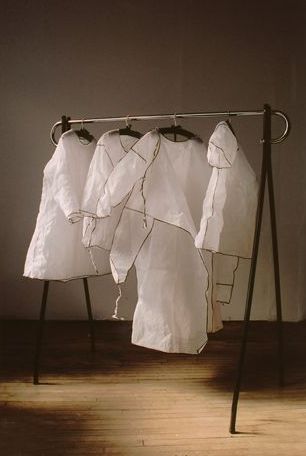
She makes some of her clothing and designer bags using industrial and surplus materials. Her post-industrial folkwear fashion line is all made from Tyvek®. When seen on the human body many of Marian's garments have a Japanese quality to the fashion styles.
Polish Designers Anna Kuczynska and Michal Lojewski also feature Tyvek® in several projects for their fashion line UEG.
Tyvek® is a malleable material which can be exploited in the fashion world to create new looks.
In the 1990s I recall how experimental embroiders on CompuServe forums talked of opening up Tyvek® envelopes for innovative machine embroidery and quilting experiments and creative techniques.
All materials can be explored and taken to new heights. Their limits are only the imagination of the creative artist.

You are reading an original Fashion Technolgy article by Pauline Weston Thomas at www.fashion-era.com ©
Invista T400 XFit Lycra
Perhaps most importantly in the world of textiles existing man made fibres can be super enhanced and refined. Invista for example revealed a new four way stretch denim fabric in 2006. By adding T400 fibre to their XFit fibre they have created a fibre that can be used in fabrics that are processed with abrasion and other aggressive finishing techniques.
The advantage of XFit Lycra spandex stretch fibre is that of helping create better fit and comfort in wear without affecting performance and wash and wear endurance. XFit helps keep the denim still feeling like denim which means more designers will be willing to use it and more consumers will be happier to buy it. Usually then higher the stretch content in denim the poorer the long term endurance of the fabric. XFit fibre overcomes this.
Innovations in textiles continue and those to Lycra are amazing. Read the many changes that have happened to Lycra from the press release by Dupont below.
INVISTA announces patent on LYCRA® brand warp stretch technology 02/22/2007
<<MILAN: February 2007 – INVISTA has announced that it has been granted a patent on warp stretch technology, a key component in the development of bi-stretch denim fabrics used in making XFIT LYCRA® garments.
XFIT LYCRA® fabric is INVISTA’s brand concept for garments that deliver the benefits of 360-degree shape and movement because they stretch and recover in multiple directions.
Fabrics made with the new fashion technology contain T400™ fibre in the warp, or in both the warp and weft, allowing designers to employ a variety of aggressive washes and abrasions without sacrificing the comfort and fit for which LYCRA® is known. T400™ is INVISTA’s trademark for fibres, fabrics, and garments made with its patented elastomultiester fibre.
This patent represents a breakthrough in the production of fabrics and garments with stretch in the warp direction. "This technology is particularly significant in denim where stabilisation has always been a challenge in the indigo dyeing process," says Robert Kirkwood, INVISTA’s Global Vice President of Technology. "Our technology allows mills to control stretch during this process, resulting in balanced fabrics that provide both comfort and excellent shape retention."
INVISTA is licensing this technology to mills, brands and retailers, which include brands like Lee Cooper, Fiorucci and Girbaud for Europe, and JBrand and Serfontaine in the United States....>>
Innovations in textiles are countless and the way consumers shop today it's clear there needs to be a never ending supply of novel ideas. The consumers appetite for new clothes, new fashions and new surprising materials knows no bounds.
Shop Till You Drop
In the main a woman chooses her clothes to either sexually attract men or to impress other women. Yet it is often forgotten that much shopping is 'Replacement Buying'.
This includes purchase of items which fulfil daily requirements such as pantyhose, socks, underwear, shoes, nightwear, sportswear, protective clothing, accessories and umbrellas. Some of these essential items are often unseen by anyone other than the wearer.
Other types of purchasing include reward, impulse and compensation buying. The purchaser is almost always able to justify this kind of buying. Then they seek moral support from a friend to help reassure them they were right to buy.
Impulse buying can be justified with the excuse that the shop will have sold the colour, size, style and pattern by next week. This is actually only too true, as many manufacturers can now respond just in time to fashion demands and bring their fashion ranges into the shops in a six weekly cycle using small short-run manufacturing.
For example Marks and Spencer used JIT (Just In Time) to restrict volume on certain styles with a shorter fashion life. Many of their acclaimed Per Una range items are destined for a small production run only. Sometimes this is also called fast track and now there is also Demand Based Flow.
In recent years (from 2006) you may have attempted to order something online at Marks and Spencer only to be told 1-2 week wait, or available plus a date 5 to 8 weeks later - Demand Based Flow at work.
Clearly the credit crunch of 2008 means this technique will become even more important as retailers and manufacturers work to match demand with real time purchasing power of the people.
For those unaffected by the 2008 credit squeeze and with cash to spend, there will be many fashion clothing bargains for several years.
You are reading an original Fashion Technolgy article by Pauline Weston Thomas at www.fashion-era.com ©
Shopping for Tweenies 5 - 10 Year olds
New market groups developed in the 1990s. Children between 5 years and 10 years are now called 'Tweenies' and even have their own TV series by that name.
They act and behave as aspiring teenagers buying tweenie targeted cosmetics, music, magazines, clothes and fripperies under parental guidance with an average of £6 pocket money a week. Also called 'Tweenagers' they make up an impressive 2 billion pound annual market in the UK.
Middle Youth New Outlooks on Shopping
Utilitarian reasons account for many of the purchases of older people.
But concepts of who and what is old or young are changing. We talk now of middle youth rather than middle age. The fifty year old woman acts like the 35 year old of yesterday, whilst the sixty year old has the attitude of a generation much more youthful than that of her parents at the same age.
A whole new apparel market called housewear has become important to the ever shifting change in homelife patterns. Increased leisure time, working from home and dressing down all contribute to watered down comfort fashion.
As well as comfort, today's consumer also seeks style and figure flattery all combined with easy care. Knit fabrics such as slinky acetate and Lycra mixes provide comfortable at home wear ideal for centrally heated rooms.
Middle youth likes to shop.
Television and Internet Shopping
Shopping directly from TV shopping Channels such as QVC gives consumers a chance to see the garments on models whilst the items are then measured with a tape by the presenter.
For the housebound, work bound and disabled customers, shopping this way with a 30 day approval facility is very attractive. More importantly, because the service is so good customers return time and again. They happily give brand allegiance if they are satisfied with the service.
Similarly shopping via the Internet from reliable brand stores such as figleaves.com, THE GAP and Maidenform offers the consumer a huge range of jeans and casual wear, or bras and underwear in extreme sizes often not found in the high street.
Clear pictures of the garments, stock availability and guaranteed return rights combined with the comfort of home fitting and speedy delivery will capture even more internet purchasers this year.
By 2008 many well known high street names were well established on the internet. They include brands such as Hobbs, River Island, Planet, Windsmoor, Alex & Co, Minuet Petite, Topshop, House of Fraser, Debenhams, John Lewis, Coast-stores.com, East.co.uk, Oasis, New Look, Principles and Warehouse as well as online catalogues such as Boden and NEXT.
Baby Boomers Consume with Opinion
One possible reason for the expanding success of TV and Web shopping is that direct shopping has tuned into the needs of the baby boomer generation.
Web shopping is providing very private niche shopping experiences from exotic fetish underwear to Italian silk ties to oversized footwear. Every hour of the day 450 baby boomers turn 50. They make up an affluent and active consuming section of the information elite of society.
Suddenly they are consuming with opinion. They refuse to buy what they do not see themselves wearing just because stores stock particular items the buyer decides is fashionable. They refuse to be pegged as middle aged. They feel they are able to self decode what they want fashion wise.
They know what they are looking for when browsing stores, but all too often it is not available. So now they browse the Internet and they become the buyer and self directed rather than store shopping for items being bought in and pre-chosen by a merchandiser.
Self selection from a world wide range will create new autonomous fashion choices.
They want to be comfortable, they want to be youthful, they want to feel and be sophisticated, they want to be casual and show they still have a finger on the pulse.
These 60's teenagers intend to be heard. Many major chain stores are simply not getting it right. In order to survive in the 21st century apparel stores need to be aware that alienating the 40 to 64 year old will be a big mistake. This age group will, by the year 2010 be the largest demographic group.
The fashion and beauty desires of the 60+ and 70+ generation need now to be addressed in the world of print. In particular magazines and newspapers with fashion articles of 'what to wear in your 20s, 30s and 40s etc.,' need to realise that their actual readers may be much older than their hoped for demographic. A fashion article or beauty topic that cuts out a huge mass of women because they are 60+ or 70++ is insulting to the readers.
The grey consumer does count and plans to be around much longer than their forebears. The grey consumer has the cash because the grey consumer probably knew the value of thrift and avoided too much credit in the past like their younger counterparts.
You are reading an original Fashion Technolgy article by Pauline Weston Thomas at www.fashion-era.com ©
Store Versus Internet Shopping
Stores and manufacturers should listen carefully to the opinions, the complaints letters and the comments of customers. Other factors retailers need to take into account include the decor and lighting of stores.
Many stores are designed by people under 35 who have a different perception of colour and light than the person over fifty, so that perceptions of colour and dim lighting may make older customers disaffected. However there are still some great stores out there such as Marks & Spencer and Debenhams providing a range of clothes in the UK at affordable prices and who continue to satisfy customers.
But if your fashion needs are not being met in the high street, vote not with your feet, but with your fingers. Click onto the web, move into the 21st century and decide to do some of your shopping on line. Purchasing replacement items like underwear and jeans is an ideal starting point for success.
Everyday tights or socks for example can be added to a tesco.com on line grocery shop in the UK or easily obtained from many specialists such as Figleaves.com.
Other fashion items and accessories or specific sizes that are difficult to find in the urban jungle can often be located via the Internet.
Fashion items such as those by designer labels Prada, Gucci, Dolce and Gabbana, YSL, Diesel, Fendi, Miu Miu and Gaultier to name just a few, can all be found at Yoox and be with you within days without trudging the stores. In the same way designer perfumes can be with you in a few days too.
You have been reading an original Fashion Technolgy article by Pauline Weston Thomas at www.fashion-era.com ©