By Pauline Weston Thomas for Fashion-Era.com
What is Lehenga?
When thinking of Indian dress you may at first envisage a draped sari worn with a choli top. But think again - Bollywood films have recently popularised the Lehenga Choli as a glamorous alternative outfit fit for the heroine to marry the hero.
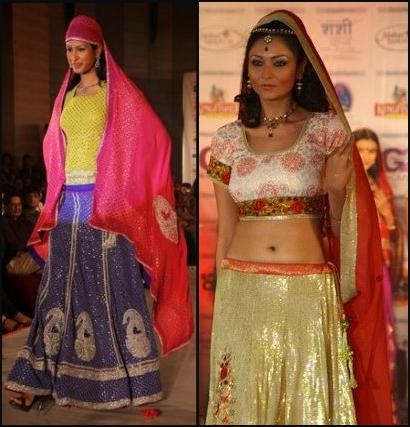
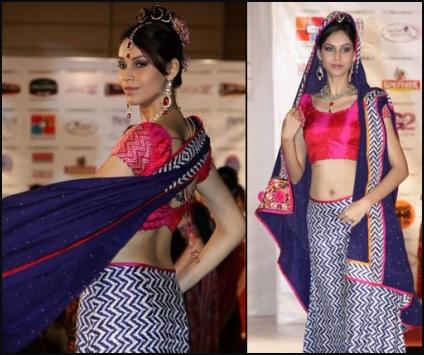
For today's Indian bride influenced by Bollywood actresses, this often makes the Lehenga Choli a perfect bridal wear choice. The lehenga is the skirt while the choli is the bodice (which can be cropped or worn longer to cover bare flesh). The Dupatta is a shawl stole that is draped over the shoulder or head as desired. Designer examples of the lehenga, choli and dupatta from Vibrant Fashion Week 2010 are shown below.
- Gold Sea, Aquamarine Lehenga Choli Fashions
- Traditional Indian Lehengas
- Fishtail Lehenga
- Rich Patterned Indian Fabrics
Gold Sea, Aquamarine Lehenga Choli Fashions
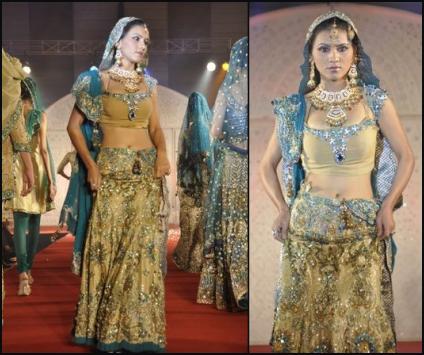
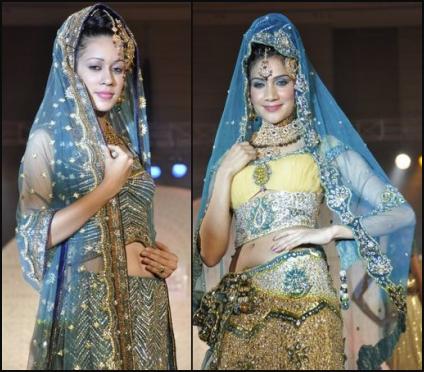
Extras include an overlay jacket for those who don't want the brevity of a choli top and a lehengas belt. Contrarily for the less modest and more modern woman, the lehenga skirt is sometimes teamed with Western crop top, halter neck or baby doll top.
Traditional Indian Lehengas - Creamy Golden Glows Beautiful Embellishment
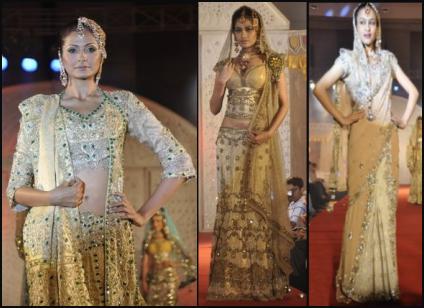
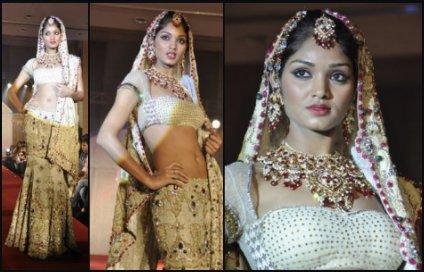
Fishtail Lehenga - Pink & Gold
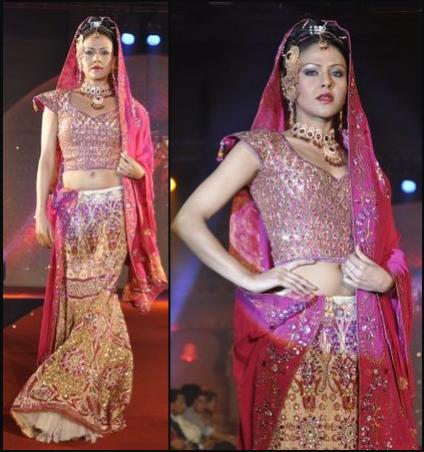
Above - The popular mermaid fishtail lehenga style and loved by younger girls.
Four Lehenga Skirt Styles
Despite many variations there are basically 4 main styles of lehenga/lengha/lehnga skirt from slim line to full. The first two are the simple styles of straight and flared.
- The first is basically a long straight skirt falling straight from the hips and it may be wraparound as in gopi skirts.
- The second the long flared skirt that gradually increases flare from hip to hem in proportion to the skirt length.
- The third is the lehenga that is pleated from the waist and the heaviness of this creates flare.
- The fourth is the form and fit mermaid fish style which hugs to the knees and then flares from the knees. Younger girls love the fishtail style.
Swirling Lehengas
Rich Patterned Fabrics
Richly patterned fabrics are used in all Indian wear but especially in lehengas, dupattas and saris. Cholis are often made of plainer materials that add contrast and pick up pattern colours.
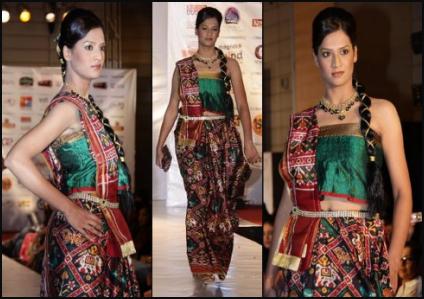
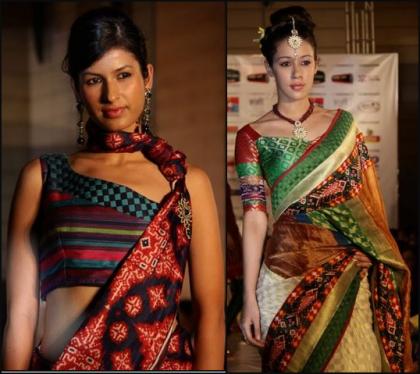
What is A Choli
The Choli - A Traditional Bodice Top of India
When women wear saris they also wear a midriff baring blouse called choli. India, Pakistan, Bangladesh and Sri Lanka are all places where women don saris. In Urdu the word for choli is lehnga and so it's easy to get confused as the many Asian languages affect clothing names.
The choli is also worn with the lehenga skirt.
You have been reading an original Indian lehenga fashion article by Pauline Weston Thomas only for publication on www.fashion-era.com ©
Header Image Courtesy Raahul Dhyani of Akshar Events & Entertainments
Date added Spring Summer 2010 - Ref:P.773.